
The connections between a tractor and trailer deserve deliberate attention during the carrier's approved inspection routine. Visible wear, an unusual position, or a damaged support can be useful information for maintenance. The driver's role is to make a safe observation, report it clearly, and obtain the required direction rather than turning a visual concern into an improvised repair.
Use the established inspection procedure
Secure the vehicle and follow the carrier's equipment-specific instructions. Stay clear of pinch areas and moving components. Do not disconnect, reposition, or operate a system merely to test a theory if that action is outside your training or the approved procedure.
For official context, the FMCSA's safety resources and Motor Carrier Safety Planner provide starting points for maintenance and inspection information. The vehicle and component manufacturers' instructions remain important for the equipment in front of you.
Describe the location precisely
Identify the tractor and trailer and state where the concern appears. Use the names and reporting fields in your carrier's procedure. Describe a visible mark, damaged covering, loose component, or apparent contact with another part without assuming which internal component has failed.
Explain when the observation was made, such as during a parked inspection after a trailer change. Avoid repeatedly moving the equipment to reproduce the concern. The useful report should not require a driver to create a hazardous situation in order to obtain a more dramatic description.
Look at the surrounding arrangement
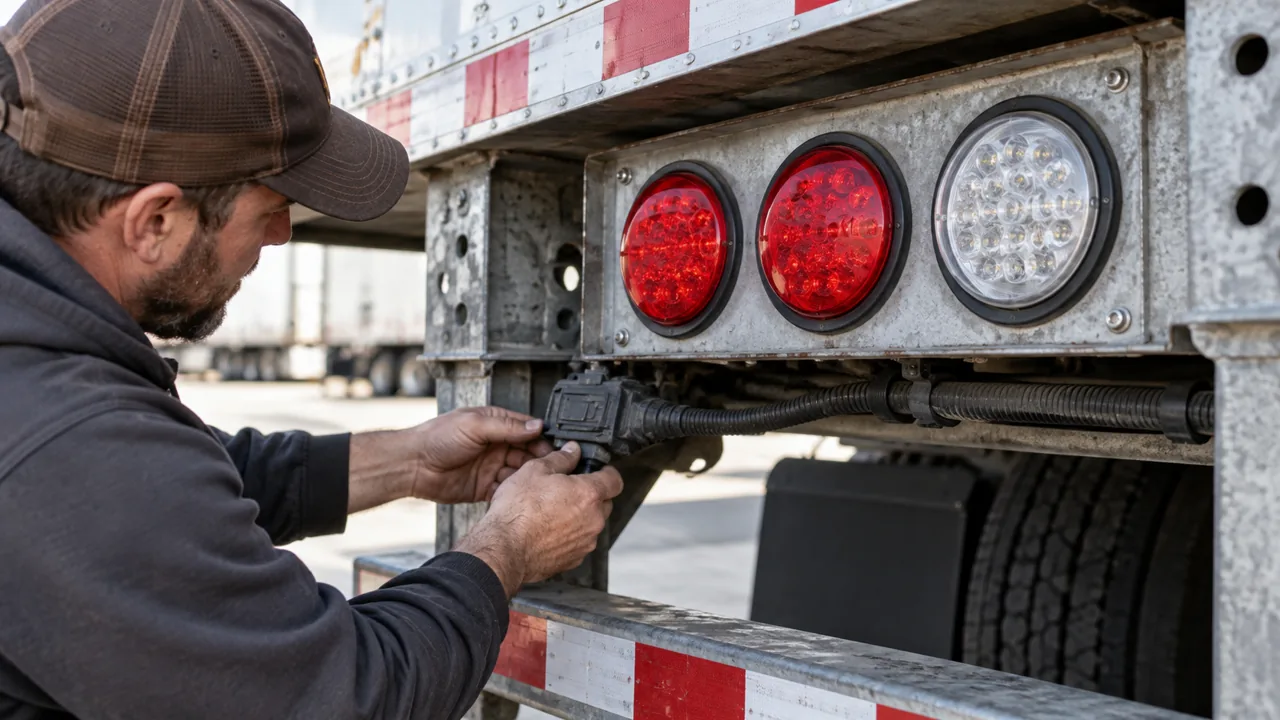
From a safe position, note relevant supports, routing, and visible contact with other equipment as required by your inspection procedure. A photograph can show context where the carrier and facility permit it. Keep the equipment identity and the location of the image clear.
Do not use improvised ties, tape, or other materials as a substitute for an authorized repair. A change that looks tidy can affect the way a line moves or operates. Bring that decision to a qualified person through the carrier's defect process.
Make the operating decision explicit
If the condition may affect safe use, follow the carrier's procedure for stopping, reporting, and obtaining a release decision. A sent photograph is not clearance to continue. Keep the report or work-order reference with the assignment and explain any unresolved status to dispatch.
If a warning or other symptom accompanies the visible concern, record exactly what was displayed or observed. Separate the symptom from your interpretation of its cause. That gives maintenance a clearer starting point and avoids hiding an important detail inside a broad statement that the connection is "bad."
Pass along the unresolved information
At a handoff, distinguish an issue that was reported from work that was completed and verified through the appropriate process. Give the next driver access to the official record rather than relying on a brief conversation in a busy yard.
A short, accurate description can be enough: equipment identifiers, the affected area, the visible observation, the reporting time, and the outstanding instruction. That is a more useful contribution than a confident diagnosis without evidence. It supports the people responsible for assessing the equipment while keeping the driver's inspection within safe, approved limits.
Related reading: Trailer Light Problems: What Truck Drivers Should Check and Report
